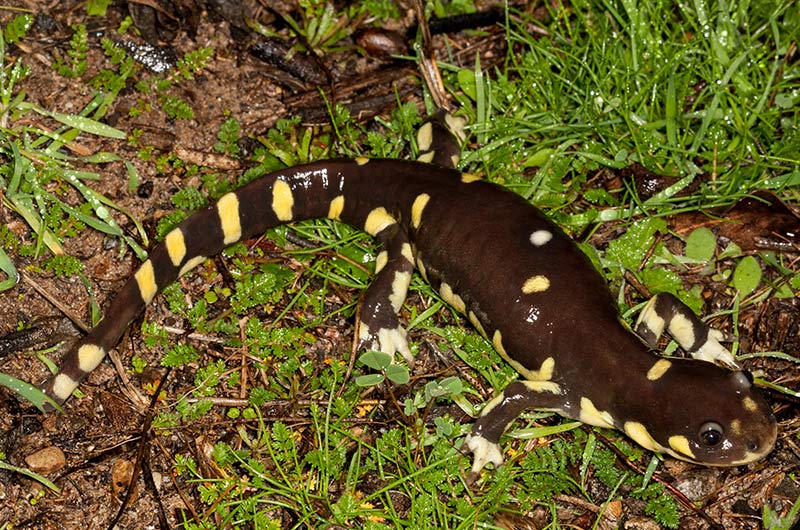
A California tiger salamander among moist vegetation.

California Tiger Salamander

California tiger salamander was historically found across the Central Valley. Recently it was found on San Francisco Peninsula. While it is still found in Sonoma County, this population is geographically separated from the closest populations to the south by 45 mi/72 km.
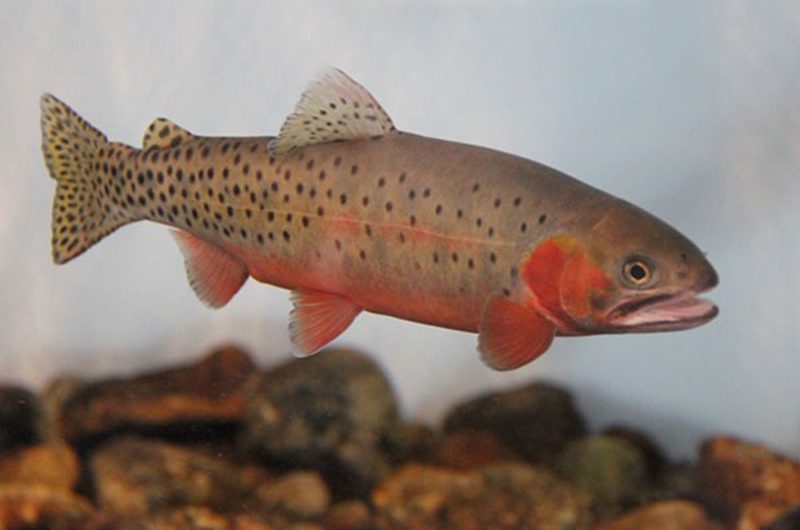
A greenback cutthroat trout underwater.

Inland Cutthroat Trout

Cutthroat trout inhabit clear, cold streams, rivers, and lakes with low fine sediment levels, well vegetated streambanks, and lots of instream cover.

A northern leopard frog rests at the surface of water on aquatic vegetation.

Northern Leopard Frog

Northern leopard frogs get their name from the leopard-like spots on their backs and limbs. Each spot is dark brown with a lighter “halo” around it. There are two color variations. One, called the burnsi phase, has a solid, spotless back and spots or bars on the legs. The other, called the kandiyohi phase, is mottled across the back and side.

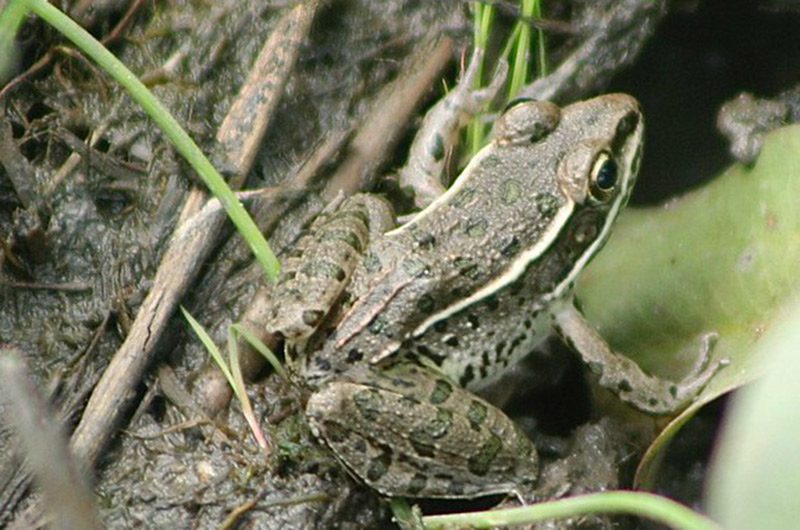
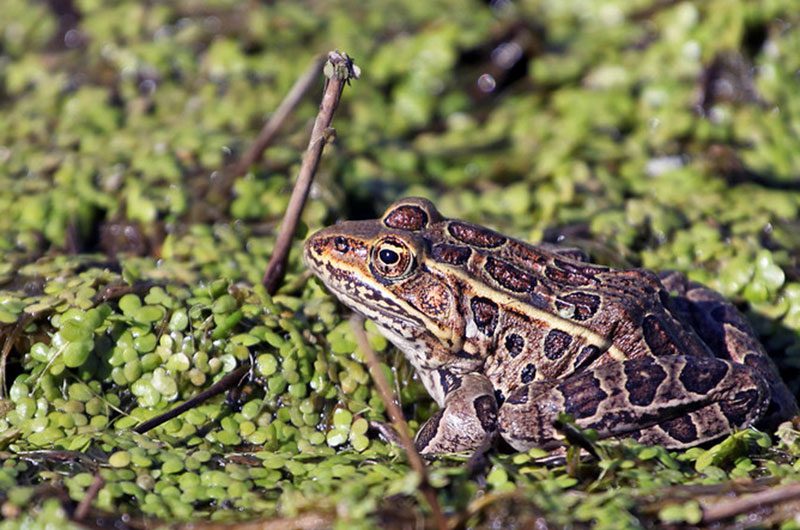
A plains leopard frog among muddy grasses and vegetation.

Plains Leopard Frog

Females lay up to a few thousand eggs from spring to early fall in temporary or permanent water sources, including ponds, flooded areas, marshes, and sloughs, often in muddy water. Tadpoles that hatch early will become young frogs by summer, while those from later clutches spend winter as tadpoles and become frogs the following spring.

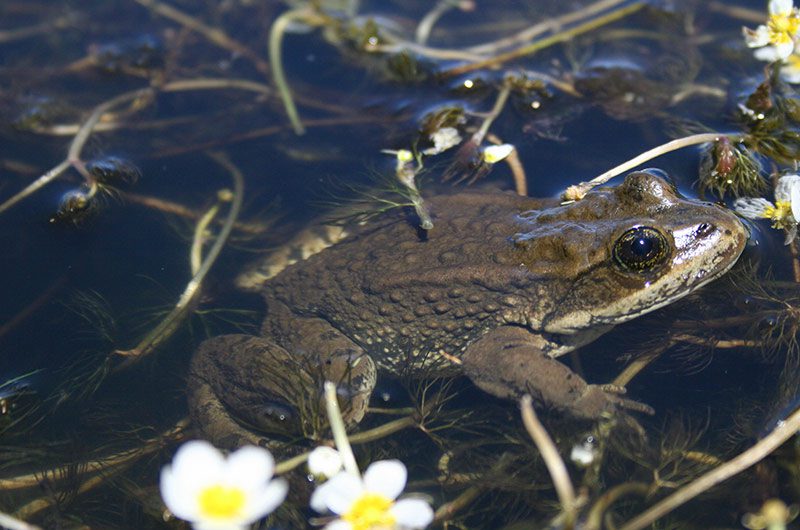
Columbia spotted frog rests among underwater vegetation with its head poking above the water's surface.

Columbia Spotted Frog

Until recently, it was thought that the Columbia spotted frog hibernated during the winter under mud. However, researchers have found that frogs are active through the winter under the ice.

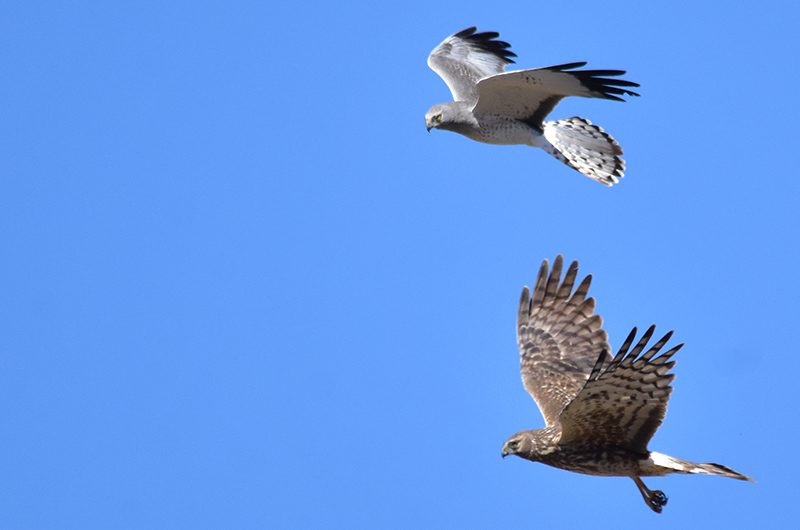
A male (top) and female (bottom) Northern Harrier in flight.

Northern Harrier

Northern Harriers are the most owl-like of hawks, though they are not related to owls. The disk-shaped face looks and functions much like an owl’s, with stiff facial feathers helping to direct sound to the ears. They rely on hearing and vision to capture prey, with its owlish face helping it hear mice and voles beneath the vegetation.

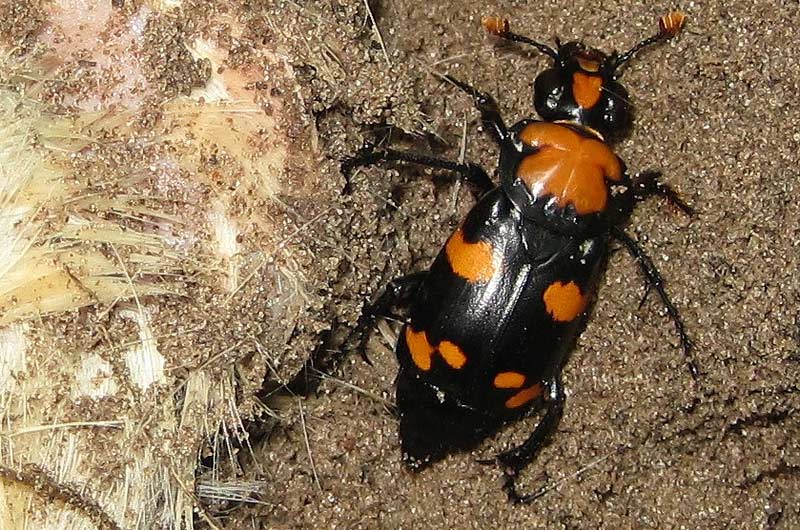
A closeup of an American burying beetle in dirt.

American Burying Beetle

The minimum carrion size for breeding purposes is small birds or mammals. Beetles will fight over highly desirable carcasses until one dominant male and female American burying beetle remain. Together they bury the carcass using secretions to preserve it.

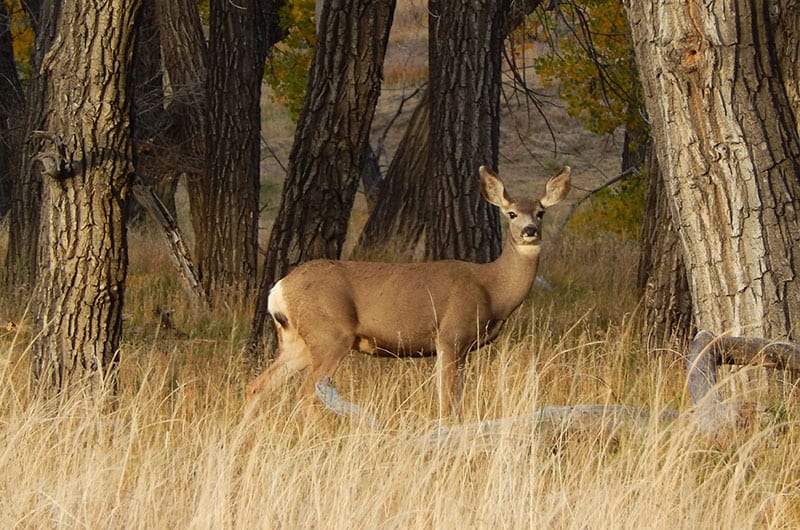
An adult mule deer stands in tall grasses in front of trees.

Mule Deer

When alarmed, mule deer bound away with four feet hitting the ground together at each bound. This is called “slotting” and is different from white-tailed deer who spring from hind to front feet.

Monarch Butterfly perched on a milkweed flower.

Monarch Butterfly

The monarch’s bright coloring warns predators not to eat it. Their toxins come from milkweed plants, which are the only food source for the caterpillars. While animals that eat a monarch butterfly usually do not die, they will get sick enough to avoid monarchs in the future.