
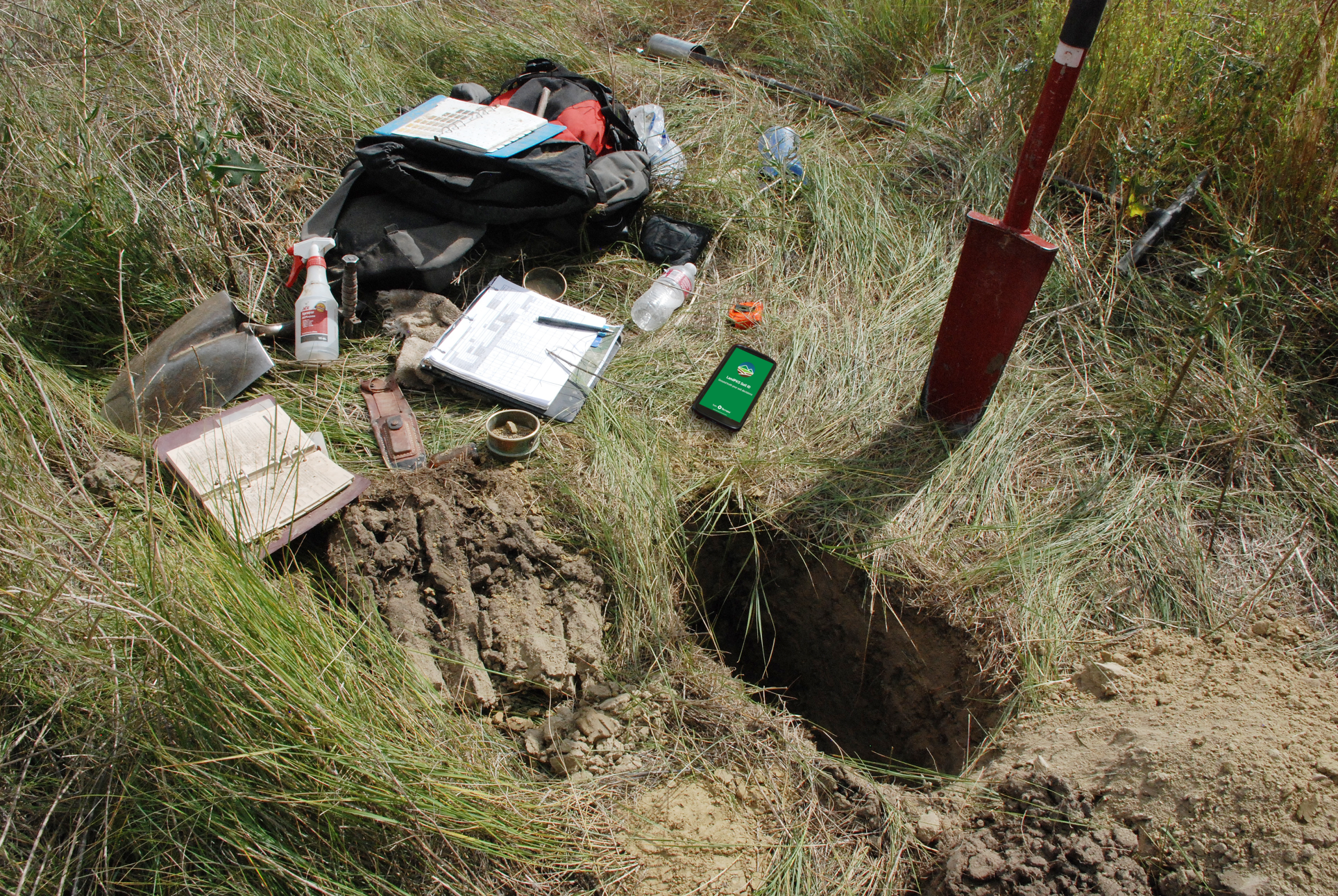
The LandPKS Soil ID Manual is here; a complete guide to using the free LandPKS Soil ID app to identify soils in the field. We wrote this manual for farmers, scientists, students, and anyone curious about the soil beneath them. Download the manual to keep on your phone or print it out to reference in the field.
The manual accompanies improvements to our online documentation. Both our help documentation and Knowledge Hub have been enriched with new and updated articles. Regardless of how you learn, these resources take you from your first use of the app to confident soil identification.
A resource for individuals and for teams
The manual contains everything you need to understand the full LandPKS workflow. It covers everything from how to select a dig site and what equipment you will need, to gathering observations and making a soil determination using the LandPKS Soil ID algorithm. Team leaders, educators, and extension staff can use the manual as a training resource for both students and professional teams. Chapters on Projects demonstrate how teams can collect and share site observations, enabling a professor to follow their student’s work or a project manager to track the progress of their team.
Want the manual in another language? If your organization is interested in partnering with us to translate the LandPKS Soil ID Manual into a language to support your community, please contact us.
With thanks to Joshua Propfe
We extend a special “thank you” to Joshua Propfe of New Mexico State University for his vital contributions to the manual. Josh’s experience training people to make soil observations and use LandPKS apps have grounded the document as a practical and informative text.

