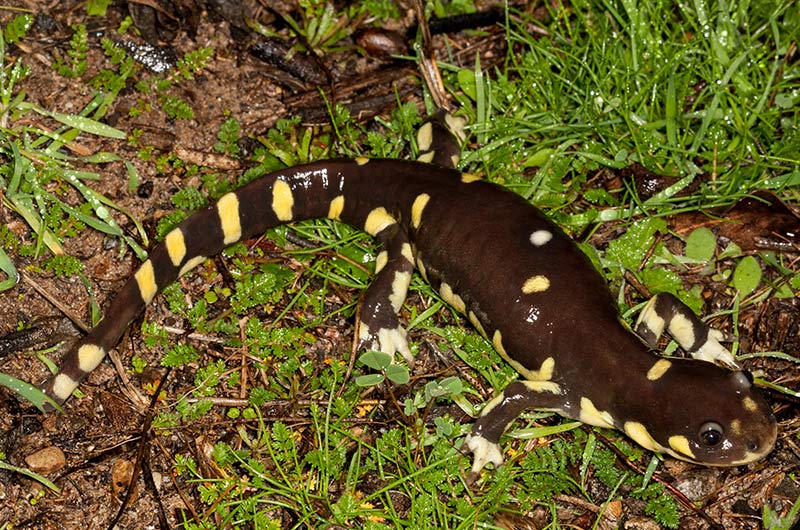
A California tiger salamander among moist vegetation.

California Tiger Salamander

California tiger salamander was historically found across the Central Valley. Recently it was found on San Francisco Peninsula. While it is still found in Sonoma County, this population is geographically separated from the closest populations to the south by 45 mi/72 km.
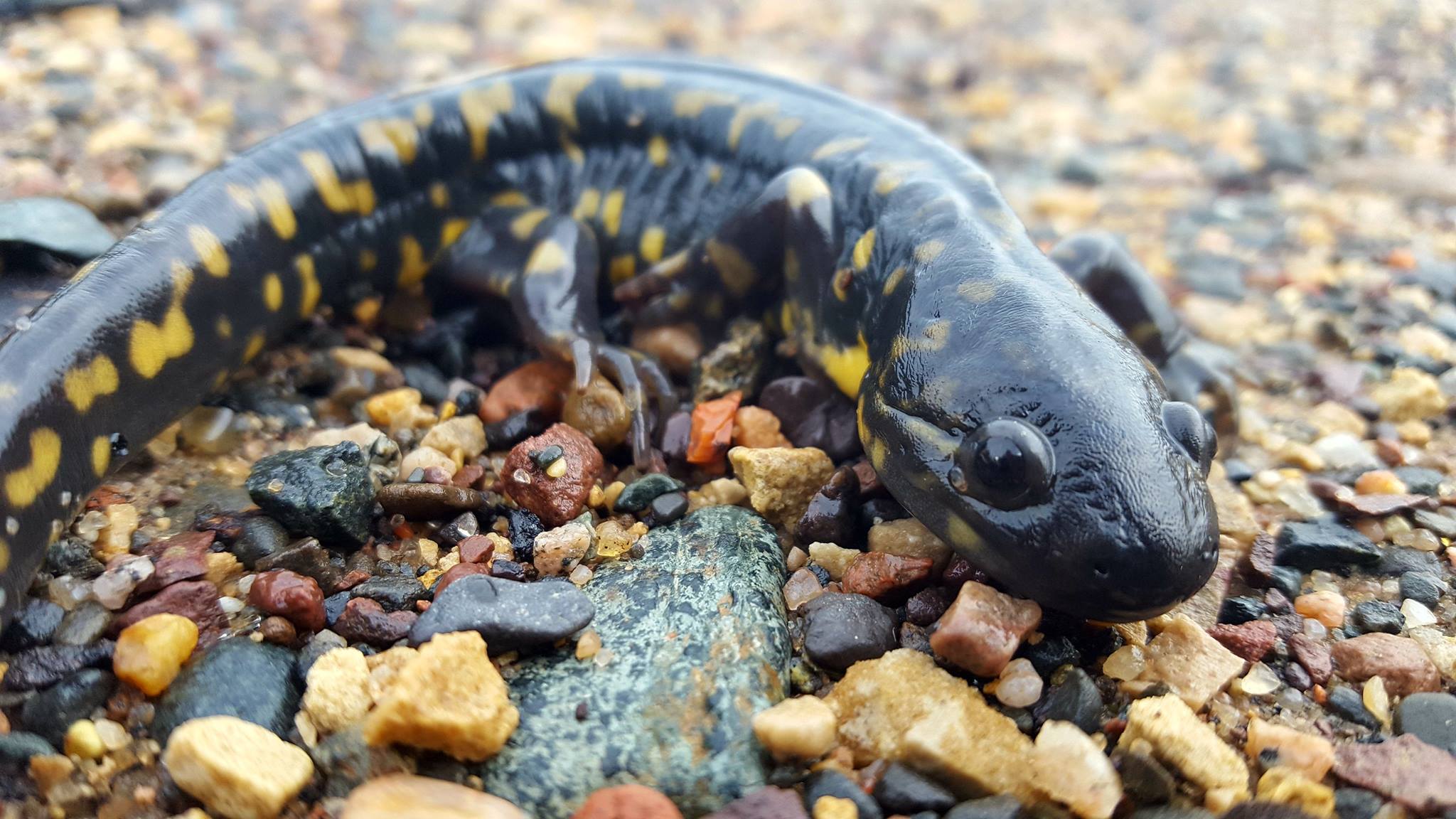
Eastern Tiger Salamander

Tiger salamanders can live up to 14 years and grow 12 in/30cm, double the average size. When too many eggs are laid in a body of water, hatchlings can turn cannibalistic as a method of survival.

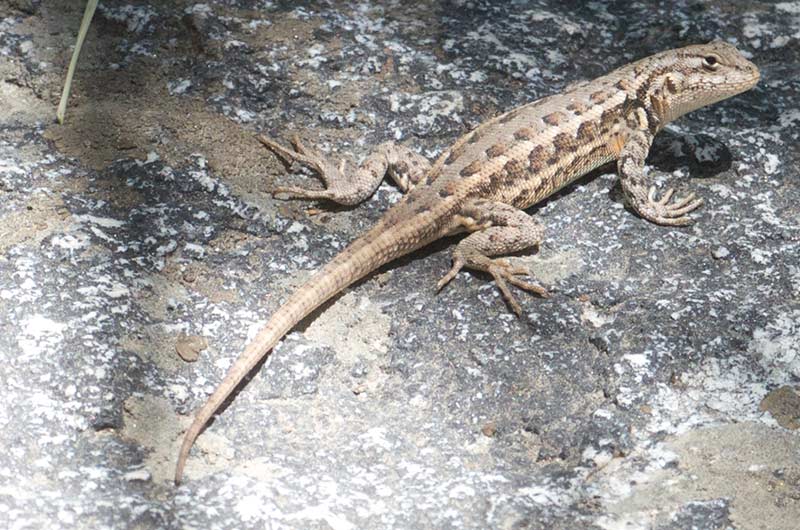
A common sagebrush lizard on a rock.

Common Sagebrush Lizard

Common sagebrush lizards can drop their tails to escape predators. The tail can regenerate like the prairie lizard, but it is usually shorter and a slightly different color than the original tail.

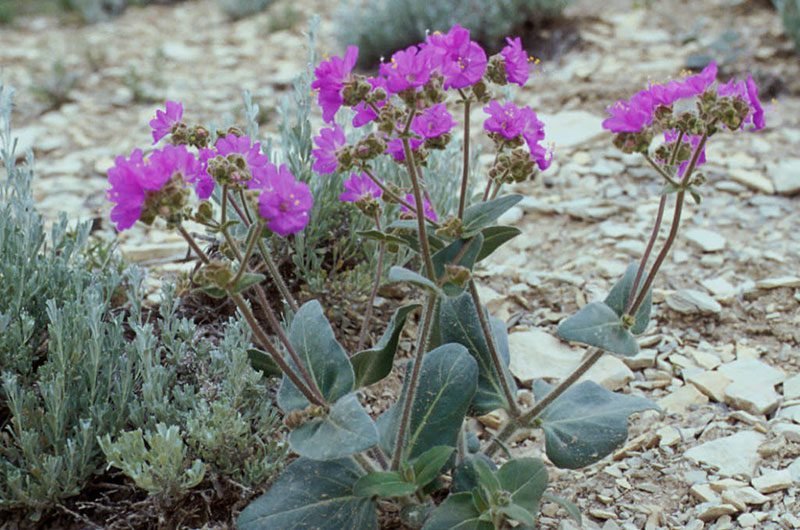
A round-leaf four o'clock Susan in bloom.

Round-leaf four o’clock

The flowers of this four o’clock open before dawn and remain open until mid-morning, just a few hours.

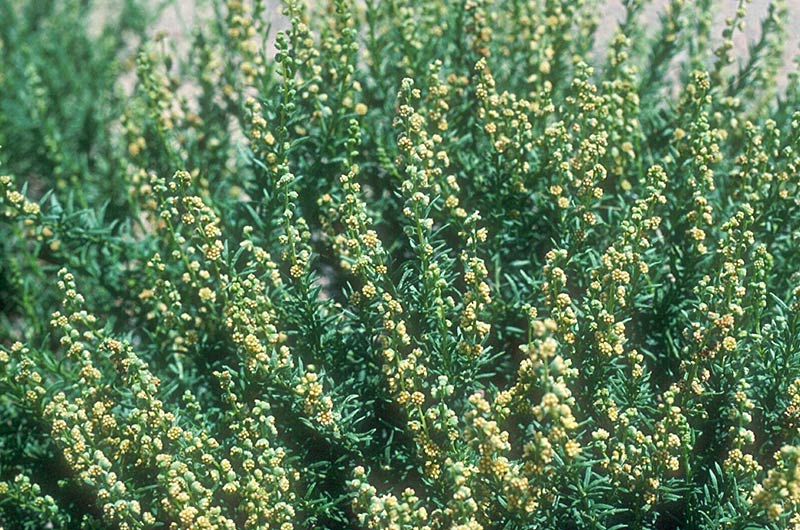
Plains ragweed in bloom.

Plains Ragweed

Plains ragweed is found in moist areas around playas, which are temporary depressional wetlands filled by local rainwater. In years with prevalent spring rainfall, many playas fill with water, and this species is abundant.

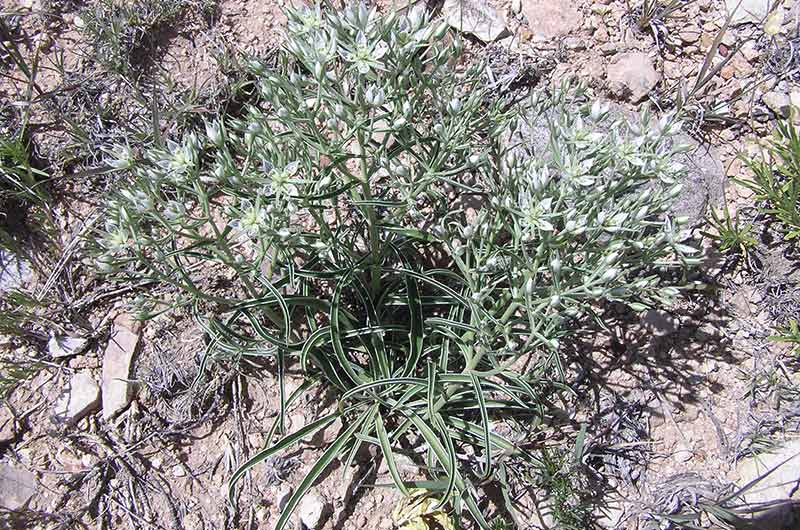
View of Bell's twinpod in bloom from above.

Bell’s twinpod

Fruits of Bell’s twinpod, are found in pairs giving the plant its name.

Spalding's catchfly among grasses.

Spalding’s Catchfly

Spalding’s catchfly gets its name from abundant, dense sticky hairs on the stems and leaves that frequently trap dust and insects.

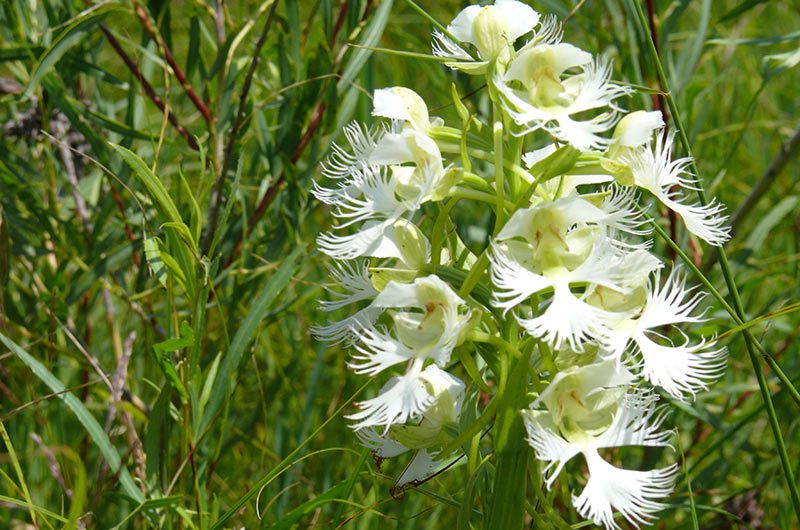
An eastern prairie fringed orchid in bloom.

Great Plains White Fringed Orchid

The Great Plains white fringed orchid flowers produce a fragrant scent from the evening and into the night to attract pollinators. The species is pollinated exclusively by sphinx moths or hawk moths, whose proboscis length matches the length of the nectar spur of the orchid flower.

Colorado green gentian in bloom.

Colorado Green Gentian

Colorado green gentian is a rather ordinary or drab looking plant compared to most gentians that are often showy with bright purple or blue flowers.

A closeup of a Florida mouse on sand.

Florida Mouse

While the Florida mouse commonly occupies the same burrows as its predators, including snakes, it avoids predation by digging a different entrance and creating side tunnels.